|  |
| Main Page |  |
A little about leather buckle styles There are lots of type of buckles, and our intent is not to cover all of them. Here we will cover: | |
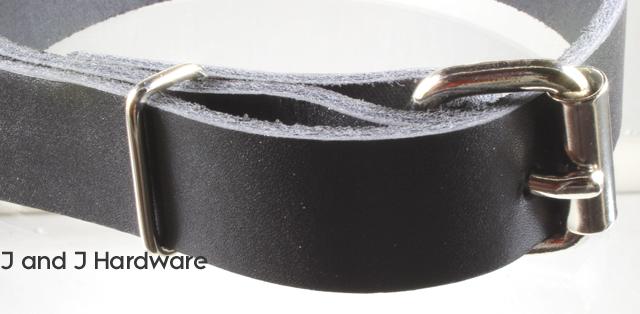
| Click any for a larger image Heel bar roller buckle seen in use on a leather strap. 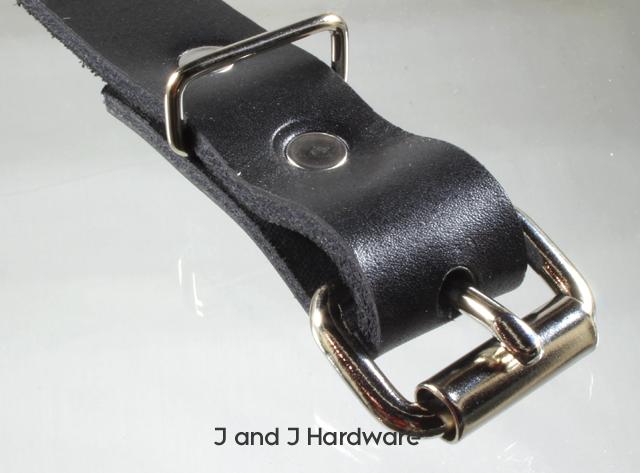 Heel bar roller buckle installed on a leather strap. | Heel Bar BucklesHeel Bar Roller BucklesLet's start with the most common, a heel bar roller buckle.You will probably see this style buckle on things like belts and dog collars more than any other. This is the work-horse of the leather industry. They require some type of keeper to control the excess material from flapping around. Here you see one of our nickel plated wire belt keepers on this example. Very simple to install, all that is required is a hole for the center of the buckle, a couple more holes to insert the rivets to hold it and the keeper in place, and you're done. This particular heel buckle is our one inch nickel plated version , however you can also find them in brass plated , black plated , stainless steel , and in a double tongue version (our next example). |
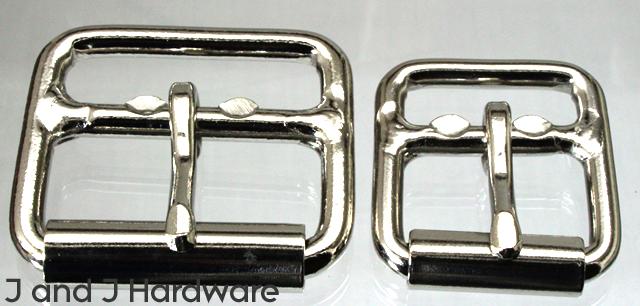
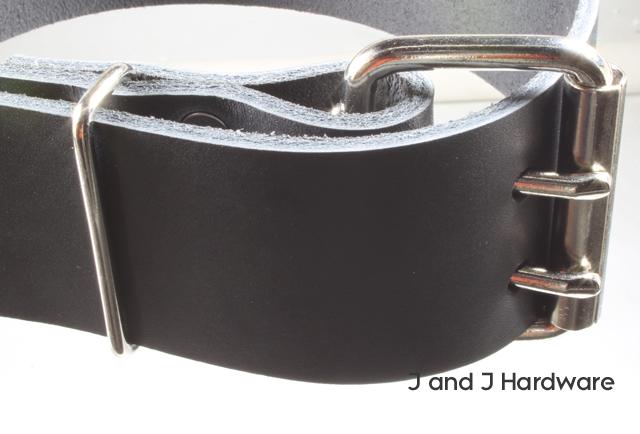 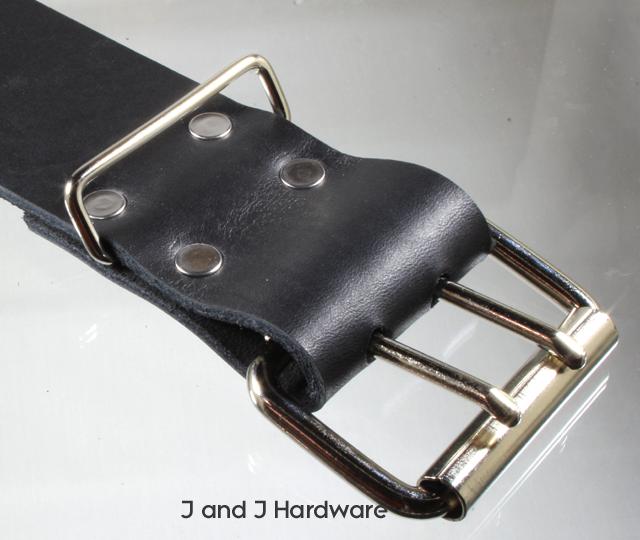 | Heel Bar Double Tongue Roller BucklesThis is a variant of the heel bar roller buckle above, except that, obviously, it has two tongues. These buckles are used almost exclusively in heavy-weight leather applications. They are ideal for weightlifting belts, horse tack, and extra heavy straps. They come in sizes up to 4 inches but only as small as the 2 inch version pictured here. A little more difficult to install, as they require even rows of a pair of holes. Not beyond the skills of even beginners though. All you need is a ruler or protractor to carefully mark out the punching points, and then punch your holes. |
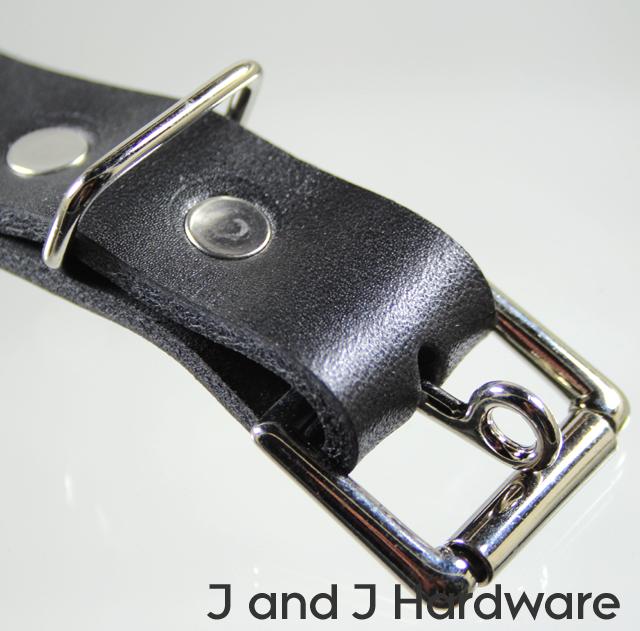 | Heel Bar Locking Tongue Roller BucklesAnother type of heel bar buckle, one that allows the user to insert a padlock for security, is the heel bar true roller locking tongue buckle . You see it here accompanied by one of our wire belt keepers , as being a heel bar buckle you need something to control the tongue of the belt or strap and stop it from flopping around. Just as with our center bar locking buckle (shown in the center bar buckle section), this is punched with a 3/8" oval punch to allow the loop in the tongue to pass through your material. It functions as a standard buckle will without a padlock, but the addition of a padlock adds a little extra security to your project. |
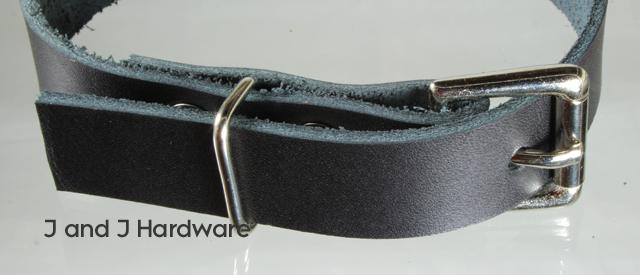 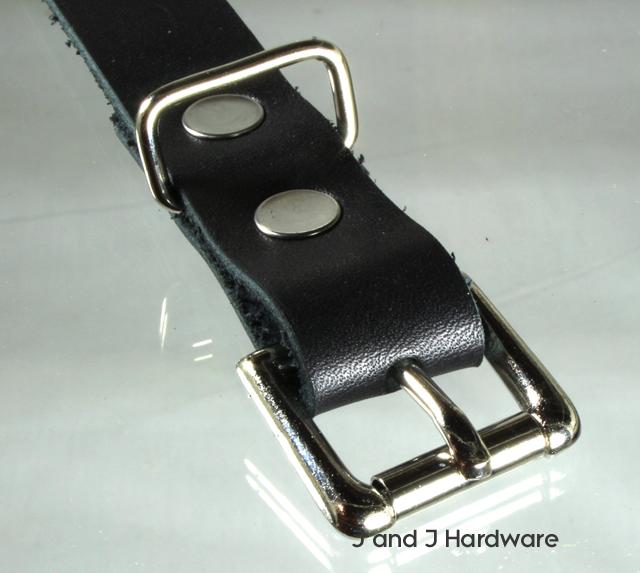 | Slim Line Roller BucklesFrom the monster above to a little petite buckle for lightweight leather as well as "faux leather" and heavier garment material. The slim line roller buckles come in sizes from 1/4 to 3/4 inch in size, making them idea for watch bands, bracelets, and small straps on bags and purses. Shown here with a wire belt keeper , all that is required is the same center hole and holes for rivets, as it is, as well, a heel bar buckle, and all of them are installed the same way. |
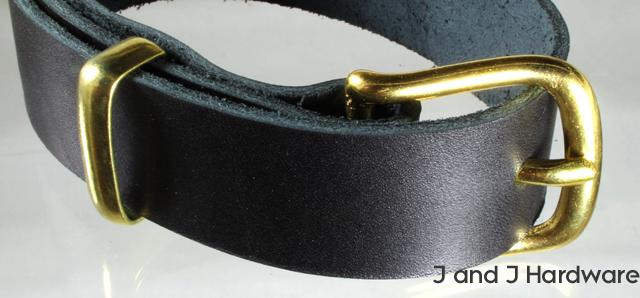 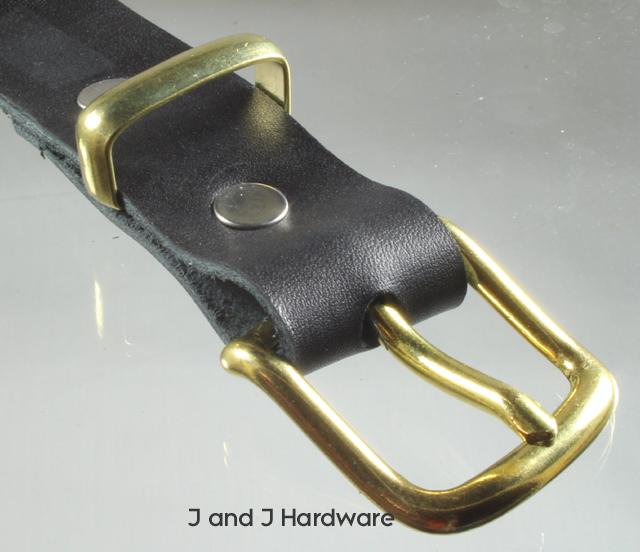 | Dress BucklesThese one inch wide dress buckles come in two different finishes. Like most dress buckles, they are not roller buckles, but feature a rounded end, far more popular in dress buckles. Shown here with a brass plated version of our deluxe belt keepers , which gives the finished belt a classy look. Installs the same as all heel buckles, very easy, even for beginners. |
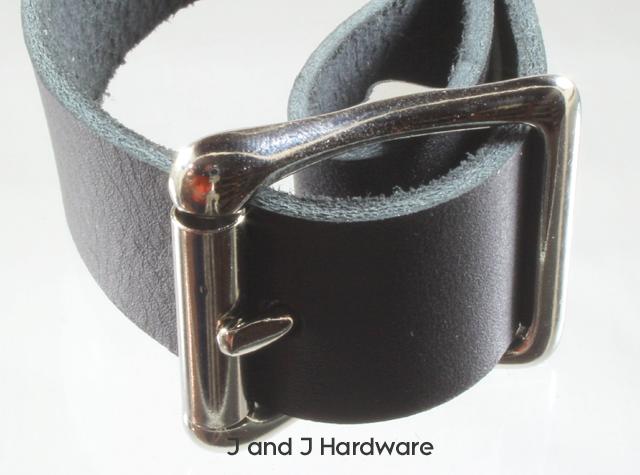 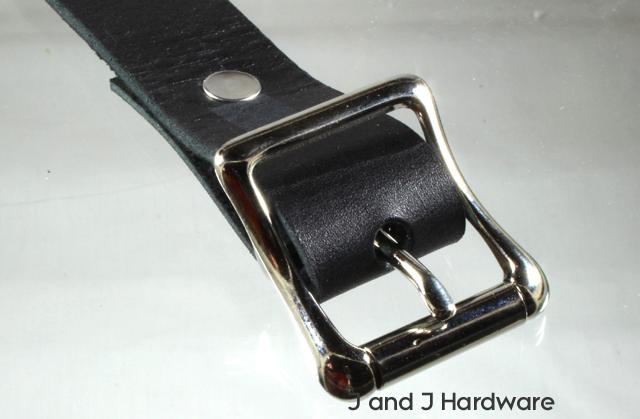 | Center Bar BucklesTrue Roller Center Bar BucklesCenter bar buckles differ from heel bar buckles in that the leather or other material wraps around the bar in the center of the buckle, and the buckle itself serves as its own keeper. They set exactly the same way as heel bar buckles. A punch in the center, insert the buckle, and then punch the hole for, and set, your rivet. These are usually used in lighter stress applications than those in which you would use a heel bar buckle. Real common to find these on lightweight straps like for backpacks, saddle bags, lighter purses, and collars for smaller dogs. There is another variation of the center bar buckle, the glide bar style, but our true roller center bar buckles in nickel plate , and shiny black are better than glide bar buckles in any application where there is stress while fastening, or frequent use. Why? Glide bar buckles, while less expensive than roller styles, will tend to chafe the leather or other material when fastened in a stress situation. Will they ruin leather? No, but they will wear the leather slightly if under a strong "tug". Glide bar buckles are great in light stress / light use applications, but if your project budget allows, these will serve the end user better. |
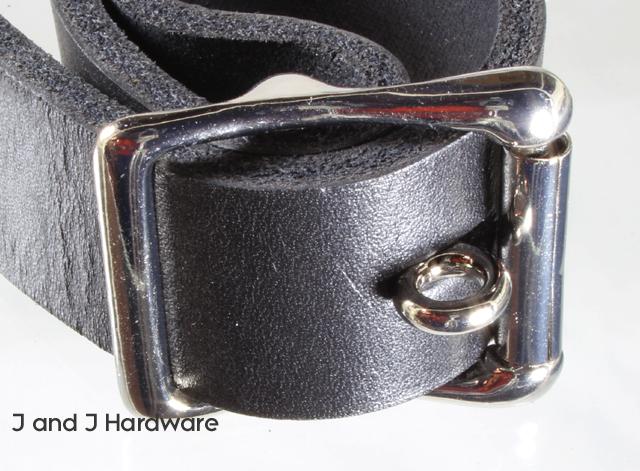 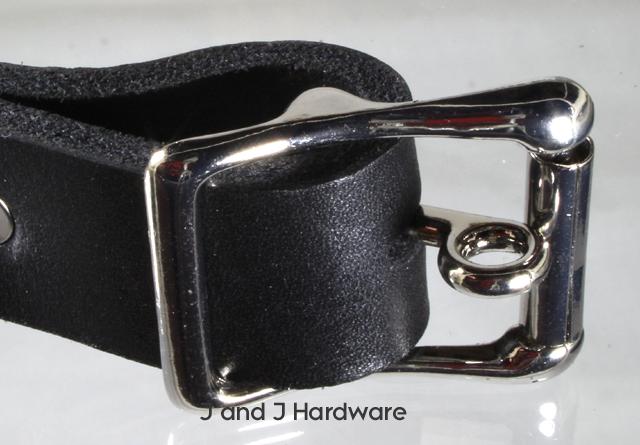 | True Roller Locking Center Bar BuckleIf you take the tongue out of the buckle above and replace it with a special tongue with a hole in it, you have this: A true roller locking center bar buckle (which we offer in nickel plated and shiny black). The hole in the tongue allows the user to place a small padlock to secure the buckle from being removed. No, I won't kid you and say that therefore no one can steal the contents of your bag, they can simply cut the strap. It will, however, deter a casual attempt at theft, and will absolutely thwart a pickpocket. Also, worthy of note, they hold just as well as a regular tongue buckle without the padlock. Locking is totally optional. A little more advanced to install, they require oval holes, not round. A 3/8" oval punch to be exact. It is no more difficult to actually punch these holes than punching a round one, but it does take a little practice to make the ovals all straight in a row. When we use these in the leather production end of our business we use a pneumatic punch and custom dies to ensure that every hole is perfectly straight and centered. That's great if you punch tens of thousands of holes as we do, but care will result in perfectly acceptable results setting by hand. |
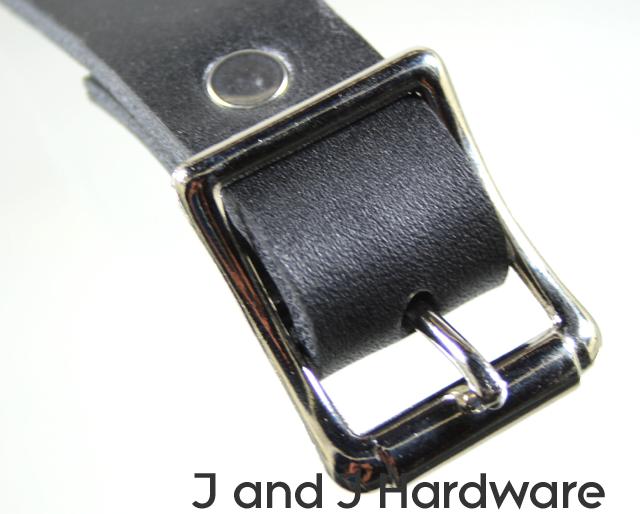 | Center Glide Bar BuckleThis is, more or less, the economy version of the center bar true roller buckle. Is it a "bad" buckle, a "cheap" buckle? No, it is neither, it is just that in some cases a glide bar is a bad choice. As explained in the "true roller center bar buckle" two buckles above, in heavy duty situations where the leather or material will come under a lot of pulling stress the roller buckle will make your project last longer. If you are using this in a situation where, how shall I say, you are "just buckling", not needing to pull hard to accomplish the closure, well, in those cases you can save some money on your project by going with a glide bar . Note the formed section at the end (you may need to click on it to see a bigger image). It is rounded and does indeed allow the material to glide over instead of being up against a squared off piece of metal, and that glide bar will provide all the protection for your material that you will need in a situation where there's not a lot of stress present. |
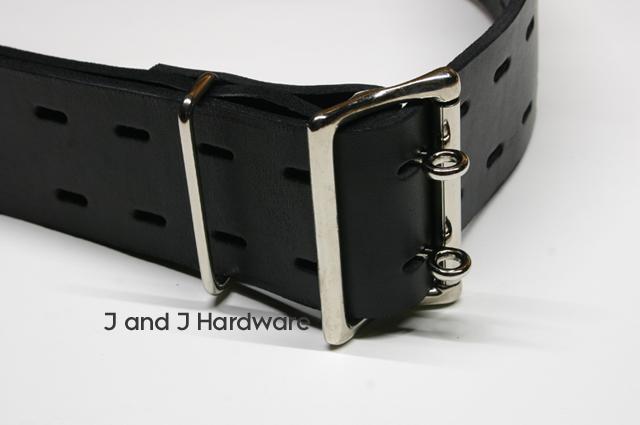 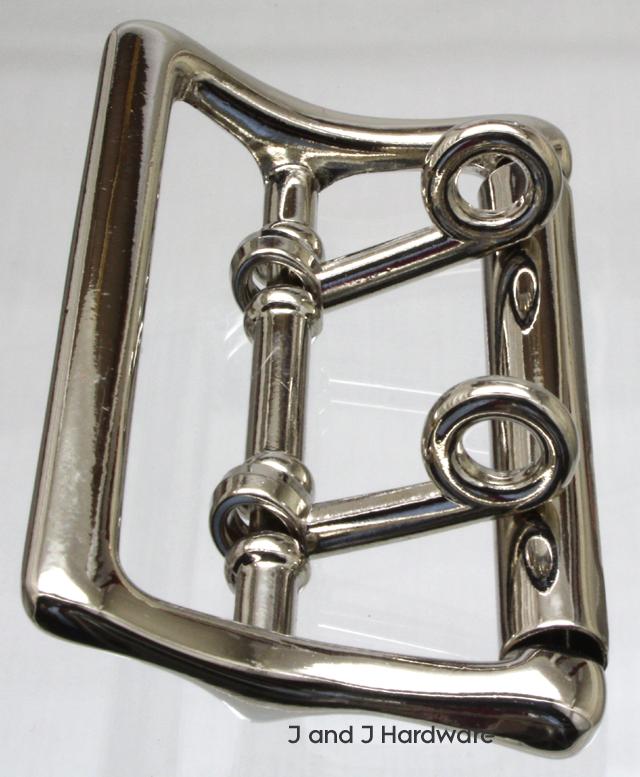 | Double Tongue True Roller Locking BuckleThis monster of a locking buckle works the same as the one above, but it has two tongues, and is a full 2 inches wide. I will be completely honest and tell you that punching this by hand has to be a labor of love, because it is no easy task. We needed these for the production side of our business, so we had them made for us. We punch the leather for these in the same big press we use for the single tongue ones above, but you can do it by hand - I personally know two people who do. In the "in use" image you can see we added one of our 2 inch wide wire belt keepers , because in really heavy leather it is tough to tuck the tongue in the other half of the buckle. Add the keeper - a piece of cake, just skip the back half when using the buckle. |
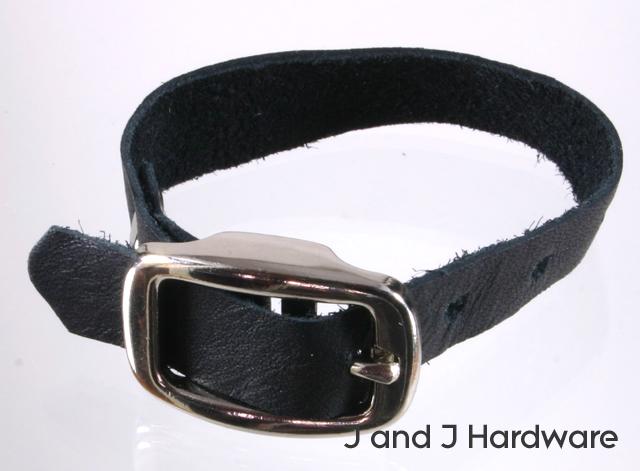 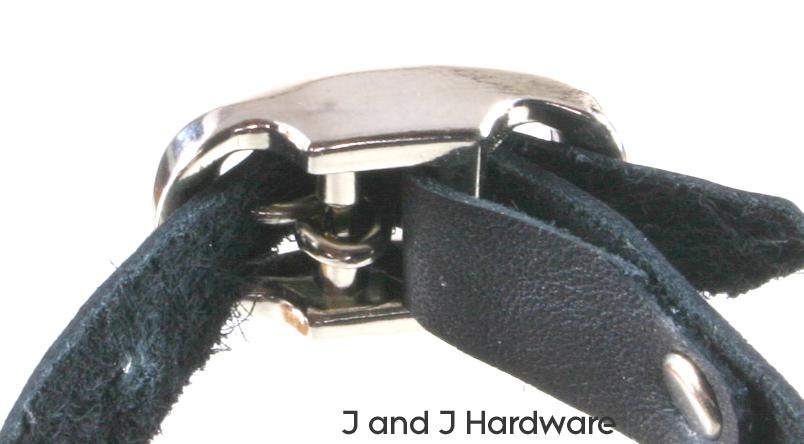 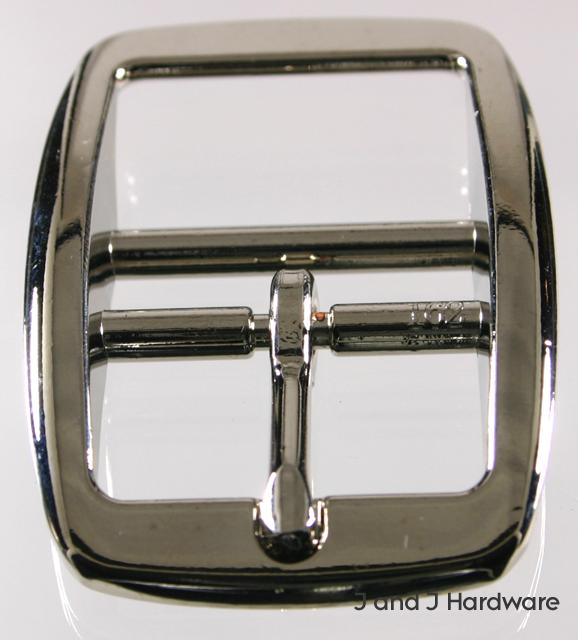 | Specialty BucklesDouble Bar BuckleThis uniquely designed buckle is absolutely perfect for watch straps, but there are many other possibilities as well. You can see how it is installed in the two photos to your left. We took a scrap of lightweight leather, about the right weight for a watch band. You can see how it looks from the wearer's side in the first photo. How this buckle is unique is that it has one more bar, lower than the other bars. That allows you to attach the strap to the underside, not punching a hole, and not getting in the way of the tongue of the strap when it is in use.Super easy to install, just rivet one end of your strap to the "under bar", punch holes for adjustment, and you're done. |
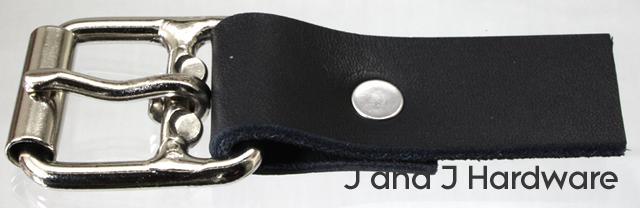  | Back Bar BuckleAnother very different buckle. The back bar buckle can be used in two ways. Treat it like a center bar buckle or, as you see here, attach the strap to the back bar and keep the tongue totally free. While we don't show it in this photo, normally you would add a keeper to the strap if you use it the way we show it. This is a really sturdy buckle, and will handle heavy leather with ease. Use it for tack, belts for a different flair, backpacks and more. |
Other informational pages we hope you will find helpful: Explain the different D rings styles | |